Se Habla Español? The Spanish-Speaking Insurance Leads Most Agencies Lose (2026)
Roughly 16 million people in the U.S. buy insurance better in Spanish, and most agencies can't staff for them. Here's the 2026 math on serving Spanish-first leads without losing them.
The lead you paid for, in a language you don't speak
Picture the lead that just hit your CRM. Right name, right ZIP, a real auto-insurance shopper. A producer dials, someone picks up, and within five seconds it's clear the person on the other end is more comfortable in Spanish than in English. The producer pushes through in English anyway, the conversation gets stilted, and the call ends with "let me think about it." That lead is gone, and you paid full price for it.
This happens every day at agencies that never decided to ignore Spanish-speaking buyers. They just never staffed for them. In 2026, that gap is one of the largest, quietest leaks in a P&C book.
How big the market actually is
This isn't a niche. As of 2024, about 68 million people in the U.S., roughly 20 percent of the country, identify as Latino, per Pew Research Center. Around 40.5 million speak Spanish at home, and of those, about 16 million speak English less than "very well," per U.S. Census Bureau data. That last group matters most for your funnel.
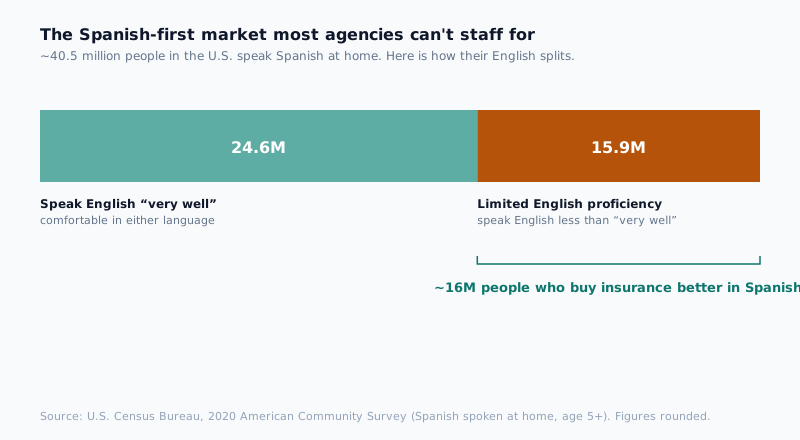
Plenty of Latino buyers are perfectly comfortable in English, and you're already winning your share. The 16 million on the right of that chart are different. They can technically get through an English call, but a policy decision, with coverage terms, deductibles, and numbers, is exactly the kind of conversation that goes better in a first language. Lose the language and you lose the sale, even when your price is best.
And this is a market with money: U.S. Latino economic output reached about $3.6 trillion, which would rank as the world's fifth-largest economy if it were its own country, per the Latino Donor Collaborative's 2024 report. These are households buying homes, cars, and policies.
Why "just hire bilingual producers" is harder than it sounds
The obvious fix is to hire bilingual staff. It's also the expensive one. Bilingual employees typically command a pay premium of roughly 5 to 20 percent over monolingual peers, and the talent is genuinely scarce. The vast majority of U.S. employers already rely on workers who speak a language other than English, so you're competing with banks, hospitals, and every call center in your market for the same small pool.
So a single bilingual producer becomes a bottleneck. They get every Spanish lead dumped on them, they can only be on one call at a time, and the instant they're out sick or quit, your Spanish-speaking pipeline goes dark. You've turned a large market into a one-person dependency.
What it actually costs you today
The leak compounds, because language sits on top of every other lead problem you already have.
- Speed-to-lead gets even slower. If your one bilingual producer is busy, a Spanish lead waits, and the first five minutes are where binds are decided. A lead that waits an hour for the "right" person to be free is already cooling.
- After-hours leads have no fallback. The leads that arrive after 5pm are a problem for everyone, but a Spanish-speaking one has even less chance of reaching someone who can help.
- You quietly overpay per bind. Every Spanish lead that goes nowhere on language is a lead you bought and threw away. Across a year of lead spend, that's real money walking out the door.
You're not failing to compete for these buyers. You're failing to have the conversation at all.
The 2026 fix: meet the prospect in their language, on the first call
This is where AI voice changed the math. A modern AI voice agent runs the entire first call, and it isn't locked to one language. When a prospect starts speaking Spanish, or simply asks "¿Habla español?", the agent continues the whole conversation in Spanish, using the same qualifying questions, compliance steps, and transfer logic as the English version. No one waits for the bilingual producer to be free, and no buyer is left to struggle through English.
The handoff still ends with a human. Once the agent has a qualified, interested Spanish-speaking prospect on the line, it can warm-transfer that live call to a bilingual producer with a one-line summary. Your scarce bilingual talent spends its time closing ready buyers instead of dialing voicemail, and stops being a bottleneck.
Worried prospects will bristle at an AI? That fear is mostly behind us, in Spanish as in English. We dug into what 2026 voice agents actually sound like.
Don't forget the compliance piece
Serving Spanish-speaking leads doesn't change the rules, but it changes how you follow them. TCPA consent requirements and call-recording-consent laws apply no matter what language the call is in. The wrinkle is that a disclosure only counts if the person understands it. A recording notice read in English to a Spanish-only speaker isn't meaningful consent, so a Spanish conversation needs the Spanish disclosures. A well-built voice agent switches the compliance language along with the conversation automatically.
What to do this week
You don't need to overhaul anything to size this leak.
- Measure it. Pull your last 90 days of leads and flag the ones that look Spanish-preferring, by surname, ZIP, or producer notes like "language barrier." Compare their connect and bind rates to your book. The gap is your leak.
- Stop the bleeding. Make sure Spanish-preferring leads aren't stuck in a queue waiting on one person. Even a clear callback offer in Spanish beats a dropped English call.
- Test a Spanish-capable first call. The leverage is answering every lead in the right language in seconds, then routing qualified ones to a human.
Where Entrovox fits
This is exactly what Entrovox is built to do. The AI voice agent calls every lead the instant it lands, and when a prospect is more comfortable in Spanish, it runs the whole conversation in Spanish, the same qualifying, compliance, and warm transfer.
- No bilingual hiring scramble. You cover Spanish-speaking buyers without competing for scarce, premium-priced bilingual hires, and your Spanish pipeline isn't hostage to one person.
- Your bilingual producers close, not dial. The AI absorbs the voicemails and no-answers and warm-transfers only qualified Spanish-speaking prospects to a bilingual human, with context on screen.
- Speed and coverage, in both languages. First calls go out in seconds, day or night, so a Spanish lead at 9pm gets a real conversation instead of a dead end.
Language coverage is still an outbound first-touch problem. The scorecard is AI voice agent for insurance agencies.
Want to see your own Spanish-speaking leads answered in their language and warm-transferred to your team? Book a 20-minute demo and we'll run a live test on your real list.