Live Transfer vs. Callback: Why a Warm Handoff Binds More Insurance Leads (2026)
A lead handed to a producer while still on the phone binds far better than a callback an hour later. Here is the 2026 math on warm transfers for insurance agencies, and how to make your own.
The most expensive second in your funnel
There is a single moment that decides whether a lead becomes a customer, and most agencies give it away without noticing. It's the second a prospect says "yeah, I'm interested," and then hears "great, a licensed agent will call you back shortly."
That callback is where the lead dies. Not every time, but often enough to be the biggest leak in the operation. The prospect was warm, on the phone, ready to talk. By the time someone dials back, an hour later or the next morning, they're in a meeting, picking up kids, or already talking to the agency that didn't make them wait.
A live transfer closes that gap by never opening it. Instead of promising a callback, you connect the interested prospect to a producer while they're still on the line. The industry has known for years that this converts better. The question worth real money is how you get those warm handoffs in the first place.
What the numbers actually say
Across 2026 industry benchmarks, standard real-time internet leads, the kind you buy and call back, close at roughly 5 to 10 percent. Live-transfer leads, where the prospect is handed over while still on the phone, close at about 15 to 25 percent for auto and 25 to 40 percent for life. Same buyers, same products. The only thing that changed is whether the prospect was still on the call when a producer reached them.
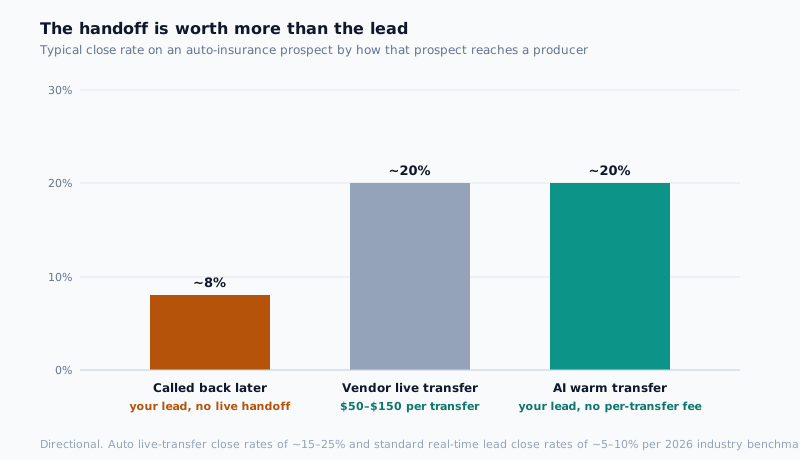
The reason is simple. A live transfer collapses speed-to-lead to zero, and it removes the callback's biggest tax: not reaching the person at all. A scheduled callback only pays off if the prospect picks up the second time, and a large share never do. A live transfer reaches them every time, because they're already talking.
The catch with buying live transfers
If live transfers convert so well, why doesn't every agency just buy them? Because the price reflects the performance.
Vendor live transfers run roughly $50 to $150 per transfer, three to five times a standard lead. And a transfer is a conversation, not a sale. At a 20 percent close rate, a $100 transfer works out to around $500 per bound policy. That can pencil out, but it's tight, and it leaves you exposed: vendors often shop the same consumer to several buyers at once, so your "warm" prospect may already be comparing you against two others, and you're stuck with the vendor's idea of "qualified" instead of your own.
So the honest framing isn't "live transfers good, callbacks bad." It's that live handoffs win, but renting them by the transfer is a pricey way to get there.
The cheaper warm transfer you already own
Here's the move most agencies miss. You're already buying leads: shared, exclusive, aged, whatever your mix. Every one is a potential warm transfer. The only thing standing between a raw lead and a live handoff is the part nobody has time to do at scale: call instantly, have a real conversation, qualify the prospect, and conference in a producer the moment they say yes.
That work is mechanical, time-sensitive, and brutal to staff by hand: dropping everything to dial each new lead in seconds, sitting through the voicemails and no-answers that are most of them, screening whoever picks up, then selling. No one does that consistently across hundreds of leads a month, so the lift either goes to a vendor or never gets captured.
This is the gap an AI voice agent fills. It makes the instant call, has the conversation, qualifies the prospect, then warm-transfers only those who qualify, handing the producer a warm buyer and a one-line summary. You get the live-transfer close rate on leads you already paid for, with no per-transfer markup, and the prospect is exclusively yours. That's the third bar in the chart above: same conversion, none of the fee.
Where this fits with everything else
Warm transfers are the payoff at the end of a chain we've written about before.
- Speed-to-lead is the setup. A lead worked within five minutes is far likelier to qualify than one called at thirty. A live transfer is speed-to-lead at its limit, zero delay. See the 5-minute rule.
- It rescues leads you waste. The after-hours leads that arrive at 9pm and sit until morning, from the after-hours lead problem, get answered, qualified, and transferred during open hours instead of going cold.
- It respects the rules. Instant calls and warm transfers still live inside TCPA calling windows and consent requirements.
- It changes lead-buying math. When you convert your own leads at live-transfer rates, cheaper shared leads pencil out differently.
Where Entrovox fits
This is squarely what Entrovox is built for. An AI voice agent calls every lead the instant it lands, holds a natural conversation, qualifies against your rules, and warm-transfers the live call to a producer the moment someone qualifies, with a one-page context card on screen so the producer is selling, not interviewing.
- Live-transfer conversion on leads you already buy. No $50-to-$150 vendor fee per handoff, and every transferred prospect is exclusively yours.
- Producers only touch warm calls. The AI absorbs the voicemails, no-answers, and non-fits, about 85 percent of dials, so producer time goes to people ready to talk.
- Instant and around the clock. The first call goes out in seconds, day or night, so off-hours leads get qualified immediately and queued for a warm handoff when the floor opens.
- Worried prospects will balk at an AI? 2026 voice agents are well past the robocall era; we cover what they sound like and the disclosure rules in this post.
What to do this week
You don't need to switch vendors to test the idea. Pull your last 90 days of leads and split them by how the prospect first reached a producer: a callback later, versus any case where you got them live on the first contact. Compare the bind rates. The live group almost always wins by a wide margin.
Then ask the harder question: what share of your leads ever became a live, qualified conversation at all? For most agencies, that small fraction is where the binds hide.
Warm transfer vs callback is the handoff. The rest of the outbound job is on AI voice agent for insurance agencies.
Want to see your own leads called instantly, qualified, and warm-transferred to your producers, without paying per transfer? Book a 20-minute demo and we'll run a live test on your real list.