How to Qualify Insurance Leads Before They Reach a Producer (2026)
Most internet insurance leads never bind, and producers burn hours sorting buyers from tire-kickers. Here is how to qualify leads first, so your team only talks to people ready to buy.
The expensive part of every lead isn't the lead
Ask most agency owners what a lead costs and they'll quote you the price they paid the vendor. That's the cheap part. The expensive part is the producer hour spent finding out whether the lead was worth anything, and most of those hours are spent on leads that were never going to bind.
That's the qualification problem. You buy a batch of leads, your team starts dialing, and the day disappears into wrong numbers, voicemails, and people who were "just looking." The handful of prospects who were ready to buy are in there somewhere. The whole job is pulling them out before a competitor does, and before your producers burn out doing it by hand.
What's actually inside a batch of internet leads
Here's the uncomfortable shape of a typical batch of fresh internet leads. The numbers move around by vendor and niche, but the pattern holds: a small slice are ready buyers, a slightly larger slice are reachable but early, a few have bad contact data, and most don't answer on the first pass.
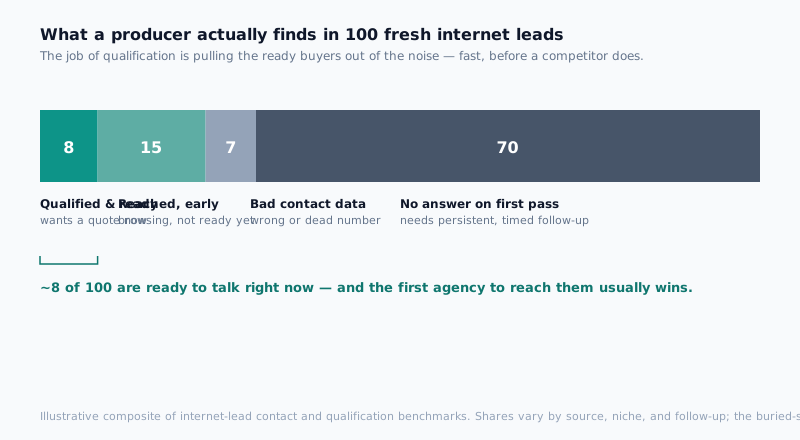
Two facts drive this. First, shared internet leads are usually sold to several agencies at once, often three to eight, so the prospect you're dialing has frequently already heard from a competitor. Industry contact rates for shared leads commonly sit around 15 to 25 percent, against 60 to 80 percent for exclusive leads. Second, a lot of people fill out a quote form to see a price, not to buy that afternoon. They're real, but they're early.
So the leads aren't junk. The ready buyers are just outnumbered, and the only thing that matters is reaching them before they bind with whoever called first.
Why doing it by hand quietly drains your agency
When qualification falls on your producers, you're paying your most expensive, hardest-to-replace people to do your cheapest work. Across sales roles, reps spend only about 30 percent of their day actually selling; the rest goes to dialing, waiting, data entry, and chasing. Other studies put the time lost to unqualified leads as high as half the week.
Now picture that on an insurance floor. A producer you're paying well into six figures, all-in, spends the morning leaving voicemails and confirming that a phone number is disconnected. Every one of those minutes is a minute they're not quoting the prospect who was ready. You're not just wasting money; you're aiming your scarcest resource at the lowest-value task in the building. We ran the full cost of that trade-off in hire another producer or automate the dials.
It gets worse with speed. The prospect who's ready now is the one a competitor is also calling now. Qualify them in the first minute and you usually set the terms; qualify them an hour later and you're often calling someone who already has a policy. That's the same dynamic behind the 5-minute speed-to-lead rule: the math punishes slow follow-up, and manual qualification is slow by design.
The four checks that actually qualify an insurance lead
You don't need a 20-field scoring model. For most agencies, a lead is worth a producer's time when it clears four quick checks:
- Reachable. The contact info is real and the person picks up. No amount of intent matters if the number is dead. This is the first filter, and it quietly removes a big slice of any batch.
- Real intent. They remember requesting a quote and still want one. "I was just comparing prices" is useful to know early, not after a producer has invested 15 minutes.
- Right timing. They're shopping now, not "maybe at renewal." If their current policy renews in five months, that's a follow-up task with a date on it, not a live transfer today. (Timing it well is its own skill; see insurance X-dates and renewal timing.)
- In your appetite. The risk roughly fits what you write and where you're appointed. A great prospect for a line you don't carry is still a no.
A lead that clears all four goes to a producer warm. One that fails on timing goes into a dated follow-up. One that fails on reachability goes into a persistent, multi-touch cadence instead of being abandoned after one ring. The point isn't to discard leads; it's to route each one to the right next step so producers only handle the ones ready to move.
Where the bottleneck really is
Here's the trap. When the backlog grows, the instinct is to hire another producer to dial through it. But if your producers are spending their day qualifying, the bottleneck isn't closing capacity, it's contact and qualification volume, and a second producer dialing the same wall of voicemail just doubles the cost of the wall.
The leverage is to take the repetitive part of qualification off your humans entirely: the instant first dial, the "is this number live," the "do you still want a quote," the "are you shopping now or in five months." That's high-volume, low-judgment work that runs the same way every time. The quoting, the objection-handling, the bind, all the judgment, stays with a licensed human who now only talks to pre-checked, interested people.
Where Entrovox fits
This is the exact gap Entrovox is built to close: it qualifies first, so your producers only get the warm ones.
- Every lead gets a first dial in about 60 seconds, 24/7. The instant call happens inside TCPA-allowed local calling hours, so the ready buyer hears from you before the three other agencies who bought the same shared lead. Speed is the first qualifier.
- The repetitive checks run automatically. In a natural voice, Entrovox confirms it's the right person, checks they still want a quote, asks what they're looking to insure and when they're shopping, and screens for basic fit, the same four checks, every time, without a producer lifting a finger.
- Only qualified, warm conversations reach a human. When a lead clears the checks, Entrovox warm-transfers them to your producer with a short summary and transcript already on screen, so the producer drops straight into quoting. Leads that are early get a dated follow-up; unreachable ones get a persistent cadence instead of being dropped.
- The AI never quotes or binds. It handles dialing, screening, and routing. Every quote, objection, and signature stays with your licensed team. You're removing the worst part of their day, not their job.
- It plays by the rules and connects more often. Instant calls run inside TCPA and DNC requirements and state calling hours, and branded caller ID keeps your number off "Spam Likely" so more of those first dials get answered.
Worried prospects will balk at an AI doing the first call? Today's voice agents are well past the robocall era, and there are clear disclosure rules. We cover both in do AI voice agents sound human.
What to do this week
You can pressure-test all of this without buying anything:
- Shadow one producer for an hour and tally the calls. Count how many minutes go to actual quoting versus dialing, voicemails, and dead numbers. The ratio usually surprises owners.
- Pull last month's leads and find your contact rate. Live conversations divided by leads worked. If it's under 20 percent, your team is spending most of its effort on leads they never even reach.
- Time your first touch. On your last 20 leads, how long from lead arrival to first dial? If the median is over five minutes, the ready buyers are being qualified by someone else first.
If those three numbers say your producers are qualifying more than they're closing, the fix isn't another producer. It's taking the first-pass qualification off their plate so they spend the day on people ready to buy.
Qualification before a licensed agent picks up is one job on AI voice agent for insurance agencies.
Want to hear an instant, branded, AI-qualified first call run on one of your own leads, and watch a warm transfer land with the context already on screen? Book a 20-minute demo and we'll run a live test on your real list.