Insurance X-Dates in 2026: Reach Prospects in the 60 Days Before They Shop
An X-date is when a prospect's policy renews — and the 60 days before it is the only stretch they're really shopping. Here's how P&C agencies time outreach to X-dates in 2026.
The prospect who said no in March and bound in September
A producer calls a homeowner in March. Friendly enough, but not interested — happy with their carrier, just renewed, please don't call back. The producer marks it dead and moves on.
In September that same homeowner gets a renewal notice with a $300 increase, types their details into a comparison site, and binds with a different agency that afternoon. They weren't loyal in March. They just weren't shopping yet.
That gap between "not interested" and "ready to buy" has a name in this business: the X-date. And working it is one of the few prospecting moves where timing beats everything else — including how good your pitch is.
What an X-date actually is
X-date is just shorthand for the expiration date of a prospect's current policy — the day it renews. It's the most useful single fact you can know about a prospect, because the weeks right before it are the only stretch when they're genuinely open to switching.
Where do the dates come from? Two places. Purchased X-date lists are built largely from public property records — when a home closes, the lender requires coverage to be in place, so that closing month becomes the policy's effective date and its annual renewal month for years after. The second source is better and free: your own pipeline. Every quote that didn't bind, every referral, every dead lead in your CRM usually has a renewal date attached to it. A prospect who told your producer "call me in the fall" handed you an X-date.
Why the window is the whole game
Most of the year, an insured has zero reason to talk to you. They've got coverage, the bill is on autopay, life is fine. Then the renewal notice lands — and in a market that's seen several straight years of rate increases, it usually lands higher than last year.
That notice is the trigger. J.D. Power's 2025 shopping research found carrier switching at an all-time high, and LexisNexis has reported that more than 45 percent of in-force policies get shopped at least once a year. A ValuePenguin survey put numbers on the behavior: 65 percent of auto policyholders didn't get a single competing quote at their last renewal — but among those whose premium went up, nearly half went shopping. The rate hike is what flips someone from "not interested" to "show me what you've got."
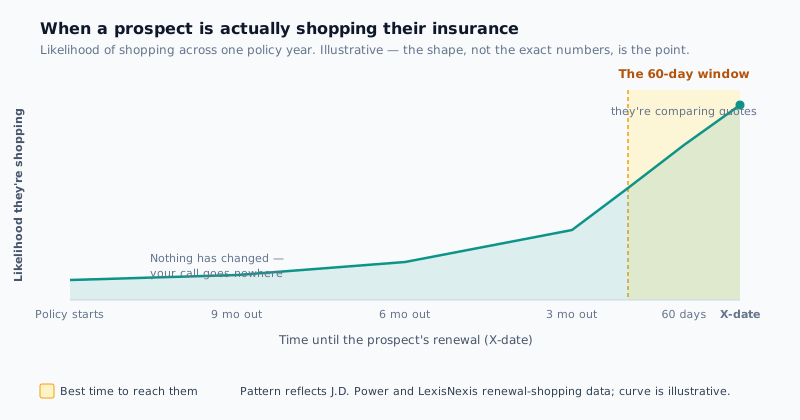
The shape is what matters. Reach out too early and nothing in the prospect's world has changed, so you're a cold call they forget by dinner. Wait until the final week and the incumbent agent — the one who controls the renewal — has usually re-secured the relationship. The 30-to-60-day window before the X-date is the narrow band where you're in front of someone who's actively comparing, but before their current agent locks in another year.
Why most agencies waste their X-date lists
Here's the catch: X-dates only pay off if you actually call on time, and timing at volume is the part humans are worst at.
Picture a list of 3,000 prospects with renewal dates scattered across all twelve months. To work it correctly, you'd need to pull everyone hitting their 30-to-60-day window each week and dial them — every week, without fail, forever. Miss two weeks and a chunk of those prospects sail past their renewal and re-up for another year. The same speed-to-lead and follow-up cadence problems that sink fresh leads sink X-date lists too — except here the deadline is fixed and unforgiving.
So the list gets bought, worked hard for two weeks, and then abandoned when new business and service calls eat the day. The renewal dates keep coming; nobody's there to meet them. It's the same labor-cost trap that leaves aged leads and dormant CRM records untouched — the work is valuable, repetitive, and never the most urgent thing on a producer's desk.
Where Entrovox fits
X-date outreach is almost custom-built for outbound AI calling, because the bottleneck is timing and consistency, not persuasion.
- Calls triggered by the date, not by who remembered. Feed in your X-date list and an AI voice agent dials each prospect in their 30-to-60-day window automatically, every week, with your agency's name on the caller ID. The list never goes stale because nobody's been too busy to work it.
- A natural, low-pressure opener. "Hi, I see your auto policy renews next month — would it be worth a two-minute comparison before it does?" The agent qualifies interest and the renewal timing, then warm-transfers anyone who bites straight to a producer to quote.
- Right time of day, too. The agent works each prospect across the hours that actually connect, not just whenever a producer had a free minute.
- Compliance on every dial. Entrovox honors your internal do-not-call list, opt-outs, state calling windows, and consent rules on every call — the timing advantage of X-dates is worthless if the outreach isn't clean.
Producers still do what they're best at: taking the warm, perfectly-timed handoff and writing the policy.
What to do this week
You don't need a new list to start — you're probably sitting on X-dates already.
- Mine your own pipeline first. Pull every quote from the last 18 months that didn't bind. Most have a renewal date or a "call me back in [month]" note. That's a free X-date list of people who already talked to you.
- Sort by renewal month. Anyone renewing in the next 60 days is your call list for right now. Everyone else gets scheduled for their own window.
- Run one month's worth. Work every prospect renewing in the next 30 to 60 days and track how many take a comparison. That hit rate — almost always higher than cold — tells you what a fully worked X-date program is worth.
The prospect who said no in March was never a lost cause. They were just early. The only thing standing between you and catching them in September is a system that calls on the right week, every week — the same cadence and speed-to-lead problem as a fresh internet lead, written up on AI voice agent for insurance agencies. Book a 20-minute demo and we'll run a live X-date call to your own phone so you can hear what perfectly-timed outreach sounds like.