Producer Call Reluctance: Why Your Best Reps Avoid the Phone (2026)
Call reluctance quietly drains insurance agencies — even strong producers avoid the dials. Here's what it costs, why it isn't a motivation problem, and how to fix it.
The quietest productivity leak on your sales floor
Walk any insurance sales floor at 10 a.m. and you'll see it: producers organizing their CRM, "researching" a lead, refilling coffee — doing anything except the one thing that grows the agency, which is picking up the phone and dialing.
This isn't a character flaw, and it isn't unique to your team. It has a name: call reluctance. It's the most expensive habit in sales, and because it never shows up as a line item, most owners never see what it costs them.
What call reluctance actually is
Call reluctance is the emotional hesitation that stops a salesperson from prospecting, even when they know exactly what they should be doing. The researchers who named it, George Dudley and Shannon Goodson, spent decades studying it and found that close to 90 percent of salespeople carry some form of it. Among experienced, high-producing reps, 40 percent admit to episodes severe enough to threaten their careers. By their estimate, call reluctance single-handedly accounts for more than half of all sales-career failures.
The cruel part: it has almost nothing to do with whether someone can sell. Plenty of producers who freeze before dialing are excellent once they're in a live conversation — the hesitation lives entirely in the gap before the call connects.
Why insurance is a worst-case environment for it
If you wanted to design a job that maximizes call reluctance, it would look a lot like working internet insurance leads.
- Most dials reach no one. Cold internet leads connect with a live person only 10 to 15 percent of the time. The other 85 to 90 percent is voicemail, no-answer, and disconnected numbers your producer dials through by hand.
- Your number looks like spam. When outbound calls get flagged "Spam Likely," even the people who would have answered don't. The producer feels the silence as personal rejection.
- The leads are shared. Most internet leads are sold to several agencies at once, so the prospects who do pick up have often already been called and frequently say "I'm all set."
- The reward is thin and delayed. Reaching a ready buyer takes persistence and timing that rarely line up on the first try — the whole reason the 5-minute speed-to-lead rule and multi-touch cadences exist.
Put a person in that environment for eight hours and avoidance isn't a surprise. It's the predictable result.
The math of un-made calls
Here's where reluctance quietly burns money. Reaching a prospect takes patience that human emotion fights against.
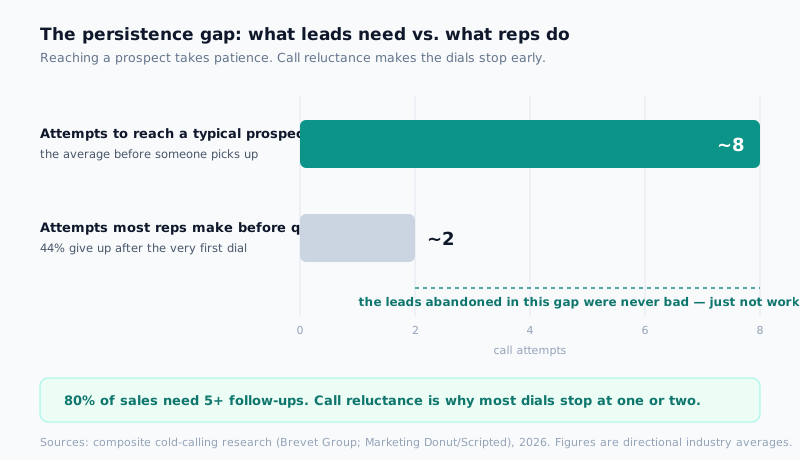
It takes an average of eight attempts to reach a typical prospect, and 80 percent of sales require five or more follow-ups. Yet 44 percent of reps give up after one attempt. The gap between those two facts is leads you paid for and never worked — not because they were bad, but because nobody made the fifth, sixth, or seventh call.
Now scale that to an agency buying thousands of leads a month. If reluctance means half your leads get one or two dials instead of the eight it takes, you're throwing away a large slice of your entire lead budget, silently, every day. It's the same trap behind aged leads that never get reworked: the lead isn't the cost, the un-made follow-up is.
Why "just hold them accountable" doesn't fix it
The instinct is to push harder — call quotas, dialing contests, a leaderboard. These help at the margins, and you should do the coaching. But accountability fights the producer's emotions every morning, and the underlying job never changes. You're asking your most expensive, hardest-to-replace people to white-knuckle through the most demoralizing part of the week, over and over.
There's a more durable fix, and it isn't about willpower. Change the work so the part that triggers reluctance simply isn't on a human's plate. You can't dread a call you never have to make.
Where Entrovox fits
Entrovox is built on a simple idea: let software do the dialing humans dread, and let producers do what they're good at — talking to interested people and closing them.
- The cold dialing leaves your floor entirely. An AI voice agent makes the first call on every new lead in about 60 seconds, 24/7, inside TCPA-allowed calling hours. It dials the wall of voicemails and dead numbers so your producers never have to.
- It never gets discouraged. Voicemail, no-answer, "I'm all set" — none of it lands on a person who has to recover from it. The AI works a persistent, multi-touch cadence with the same patience on attempt eight as attempt one, the exact persistence reluctance destroys.
- Producers only get warm, qualified conversations. When someone's interested and a real fit, Entrovox warm-transfers them with a summary and transcript already on screen. Your team drops straight into quoting — no dialing, no rejection grind, just the conversations they enjoy.
- It keeps your number trusted. Calls run with branded, monitored caller ID so more dials get answered — and the AI absorbs the ones that don't.
- The AI never quotes or binds. Every quote, objection, and signature stays with your licensed producer. You're removing the worst hour of their day, not their job.
The deeper win is cultural. A floor that isn't grinding through rejection has better morale, lower burnout, and far less producer turnover — and replacing a producer is one of the most expensive things an agency does. We ran the full build-versus-automate math in hire another producer or automate the dials.
What to do this week
You can diagnose your own reluctance problem without buying anything:
- Pull dial counts per producer. Compare attempts-per-lead against the eight it takes to reach someone. If most leads get one or two dials, reluctance is costing you leads right now.
- Find your worked-lead rate. Of last month's leads, how many got five or more touches? If it's a small fraction, you're paying for leads you never work.
- Ask your best closer what they hate about the job. It's almost never closing. It's the dialing, the voicemails, and the rejection before it — the exact part you can take off their plate.
If those numbers say your producers are avoiding the phone, the fix isn't a tougher quota. It's letting them stop making the calls that make them want to avoid the phone.
Call reluctance is why licensed agents should not live in the dialer. The alternative is AI voice agent for insurance agencies.
Want to hear an AI voice agent make an instant, branded first call on one of your own leads — and watch a warm, qualified transfer land with the context already on screen? Book a 20-minute demo and we'll run it live on your real list.