New in Entrovox: An After-Hours Calling Lane That Books Callbacks While You're Closed
Point a lead source at after-hours arrivals only and the AI qualifies your 8pm leads, books a callback, and hands your licensed agents a confirmed morning appointment.
Most of what an agency loses to the evening is not a lead problem. It is a staffing problem wearing a lead problem's clothes: the leads arrive at 8pm, and nobody is there.
This release closes that gap properly. You can now point a lead source at after-hours arrivals only, and the AI voice agent works that lane by itself — qualifying the evening lead, booking a callback, and handing your licensed agents a confirmed appointment for the morning instead of a cold list.
Here's everything that shipped, at a glance:
- Arrival window — point a lead source at after-hours arrivals only and leave your daytime leads to your team.
- Evening calls that qualify and book — one key qualifying question, then a booked callback, with booking always winning.
- Callbacks that sound like callbacks — the whole script knows it is a return call, not a cold dial.
- A real front-desk opener — after-hours inbound answers warm and generic, the way a receptionist would.
- Ricochet360 knows what happened overnight — timezone-correct callback tasks on the right person, plus opt-in status write-back.
- Warm transfer, one control — every transfer setting grouped, and off-and-locked on an after-hours-only source.
- Try a scenario before you flip it on — the test console shows the behavior your live calls would actually choose.
- Do-not-call screening at intake — every email and API lead is checked against your do-not-call list before it can be dialed.
The problem this fixes: you were racing yourself
If you run live email or API lead delivery, Entrovox has always dialed on arrival. That is exactly right at 8:47pm. It is less right at 10:15am, when a lead lands and one of your licensed agents was already reaching for it.
Agencies told us the same thing repeatedly: keep the instant dial, but only where I actually have a hole. That hole is the evening.
New: choose which arrivals the AI calls
Every email and API lead source now has an Arrival window control on the How to call card, in both the create wizard and the source detail page.
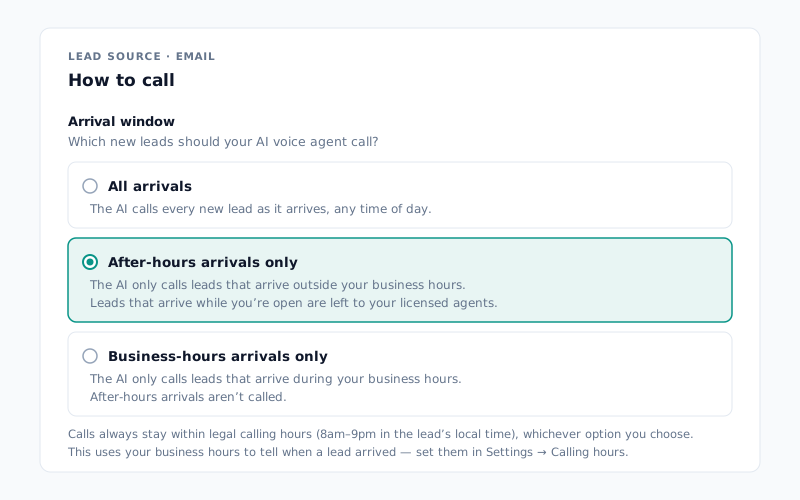
Three options, and nothing changes unless you change it — every existing source stays on All arrivals.
- All arrivals — today's behavior. The AI calls every new lead as it lands.
- After-hours arrivals only — the AI works the evening and weekend arrivals. Leads that show up while you are open are left alone for your team.
- Business-hours arrivals only — the inverse, for agencies that want coverage on the floor rather than after it.
Two details worth knowing. Entrovox buckets a lead by whether your office was open when the lead arrived, using your configured calling hours in your agency's timezone, and it is holiday-aware — a lead that lands at 2pm on Thanksgiving counts as an after-hours arrival, because you were closed. And the arrival window governs which leads the AI picks up, never when it is allowed to dial: every call still runs inside the 8am–9pm window in the lead's own local time, so a 1am arrival is held until morning rather than dialed at 1am.
New: the evening call qualifies and books
An after-hours call used to stop qualifying the moment the lead showed interest — which meant your hottest evening lead, the one who said "yes, I'm shopping" on the first turn, arrived in your morning queue as a name and a phone number.
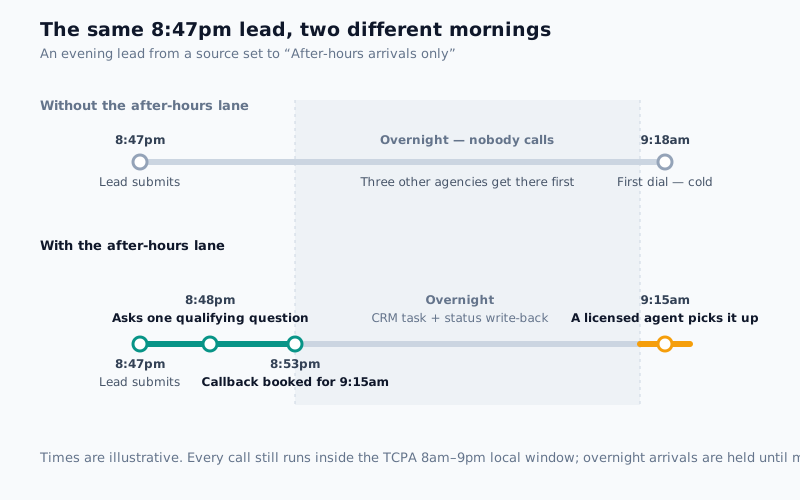
Now the AI asks one key qualifying question early — roughly what they are paying today and what is prompting them to shop — records the answer, and then books the callback.
The ordering is deliberate and it is enforced: booking always wins. The AI will not over-qualify, will not re-ask something the lead already answered, and will never withhold the appointment to keep asking questions. Your team opens the morning with a name, a premium, a reason they are shopping, and a time.
New: callbacks that sound like callbacks
A scheduled callback used to open like a cold dial, which is a strange experience for someone who asked you to call at that time.
Callbacks now know what they are. The opener is explicit:
"Hi Marcus, this is Robin again from Harbor Point Insurance. You asked me to call you back at this time about your insurance quote. Is now a good time to talk to a licensed agent?"
And it is not just the first line. The whole script is callback-aware now — how the AI handles a screener, how it re-frames the premise if the lead sounds hazy, and how it answers objections all reference the earlier conversation instead of pretending it never happened. When the prior call has no summary to draw on, the AI falls back to a minimal, honest framing rather than inventing continuity.
New: a front desk that sounds like a front desk
When a lead calls your agency back after hours, the AI now answers the way a receptionist would:
"Hello, this is Harbor Point Insurance. How may I help you?"
Previously it led with the caller's name and a disclosure before the caller had said a word. Now it opens warm and generic, and the personal touch — "Hi Marcus, thanks for calling us back" — lands once the caller is actually engaged, and only for a returning caller Entrovox recognizes from a real prior call or voicemail. If a caller asks who they are speaking to, the AI still says so plainly. Your daytime inbound experience is unchanged.
New: Ricochet360 knows what happened overnight
The after-hours lane is only useful if the work shows up where your team already lives. Three things changed on the Ricochet360 integration:
- Callback tasks land on the right person. When a booked callback fires, Entrovox creates the task on the Ricochet lead and assigns it to the licensed agent who should take it.
- Reminders read in your timezone, and the links work. Task reminders now render in your agency's timezone rather than a server default, and the task link opens the actual record — verified against live tenants.
- Opt-in status write-back. After an after-hours dial, Entrovox can write a benign "we called" status back onto the Ricochet lead — Called – Left Message or Called – No Contact — so your morning queue can see the touch instead of working blind. Reaching a human writes no status at all; that conversation belongs to your team, not to an automated status change. This is off by default and enabled per agency, so ask us to switch it on for your org.
New: warm transfer is one control
The warm-transfer settings on a lead source — qualification criteria, transfer number, the Spanish desk, caller ID, and the whisper message — are now grouped under a single Warm transfer control instead of scattered down the card.
A source set to After-hours arrivals only shows that whole group off and locked, which reflects how the product actually behaves: inside your transfer hours the AI warm-transfers as it always has, and outside them there is nobody on the floor to transfer to, so it books a callback instead.
New: try a scenario before you turn it on
The test console on the agent page was rebuilt around scenarios. Pick a direction and whether the call lands inside or outside your transfer hours, and Entrovox shows you the behavior it would actually choose — transfer, or callback booking — along with the preconditions that decision depends on.
The important part is what is underneath it: that answer is computed by the same production logic that runs your live calls, not a separate demo path that can drift away from reality. If the console says a Saturday evening inbound call books a callback, that is because the live selector says so.
New: do-not-call screening at intake
One more piece makes the whole lane safe to run unattended: every lead arriving through email or API intake is now screened against your do-not-call list at the moment it arrives, before it is ever eligible to be dialed. The check runs ahead of the insert, so a suppressed number never enters the dialable pool in the first place.
What it looks like end to end
Put the arrival window, the one-question qualifying call, and the booked callback together, and a single 8:47pm lead runs itself from arrival to a confirmed morning appointment:
Where this fits with everything else
- It is the fix for the problem we sized earlier. Roughly 35 to 40 percent of internet leads arrive after 5pm — the full math is in the after-hours lead problem.
- It keeps speed-to-lead intact where it matters. A 60-second first call on an evening lead is still the 5-minute rule working at its limit, just pointed at the window you were not staffing.
- It respects the calling rules. Arrival windows sit on top of, not instead of, TCPA calling windows and consent requirements.
- It picks the right handoff for the hour. A booked callback is the correct move when the floor is empty; a warm transfer is the correct move when it is not. We compared them in live transfer vs. callback.
- Yes, prospects talk to it. What 2026 AI voice agents actually sound like, and the disclosure rules, are covered in do AI voice agents sound human.
What to do this week
If you already run a live email or API source, the change takes about a minute:
- Open the lead source and find Arrival window on the How to call card.
- Confirm your business hours are right in Settings → Calling hours — that setting is what tells Entrovox when a lead "arrived after hours."
- Set the source to After-hours arrivals only and let it run a week.
Then compare two numbers you already have: what share of your evening leads reached a real conversation before, and what share reach one now. That gap is what you were donating to the three other agencies in the prospect's inbox.
The after-hours lane is one job on the AI voice agent for insurance agencies scorecard.
Want to see it running on your own lead flow? Book a 20-minute demo and we'll set the arrival window on a live source with you.