The Welcome Call: How New-Client Onboarding Cuts Insurance Churn (2026)
First-year clients churn far more than long-term ones, yet most agencies never make a welcome call. Here is the onboarding call that protects the business you already won.
The client you already won, then quietly lost
A new auto-and-home client binds on Monday. The producer is thrilled, the policy is issued, the commission posts. Then the agency goes silent. No call, no welcome, nothing — until a renewal notice eleven months later, by which point the client has forgotten your name, doesn't remember what they bought, and just saw a competitor's ad promising to cut their bill.
They switch. Not because your price was wrong, but because nothing ever made them feel like a client instead of a transaction.
This is the leak almost nobody works. Agencies pour money and energy into the top of the funnel — buying leads, calling them fast, dialing them more times — and then treat a freshly bound policy as the finish line. It's the starting line. The most fragile clients in your entire book are the ones you just signed.
Where the churn actually hides
Most owners track one retention number for the whole book and feel fine about it. The average agency retains somewhere around 84 to 85 percent of clients a year; elite shops hit 93 to 95. But that single number hides where the loss concentrates.
Break retention out by how long a client has been with you and a cliff appears. First-renewal retention for an average agency runs roughly 70 to 75 percent — by far the steepest drop in the relationship. Clients who make it past that first renewal are dramatically more likely to stay for years. Churn is highest in year one and falls sharply after a client gets a few renewals under their belt.
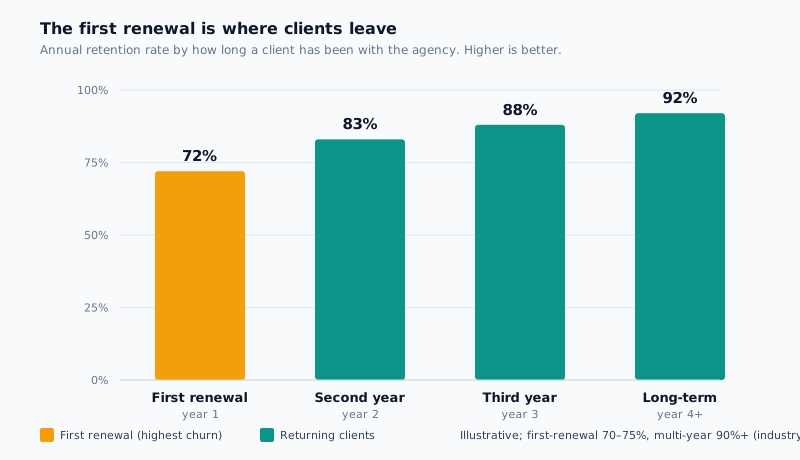
The pattern is intuitive once you see it. A brand-new client has no relationship with you yet. They don't fully understand the coverage, they have no history of good service to fall back on, and they have no reason to be loyal. They're a price away from leaving because price is the only thing they have to go on. A four-year client, by contrast, knows their agent, has had a claim handled well, and wouldn't switch to save twenty dollars.
Why the welcome call rarely happens
If onboarding new clients is so valuable, why does almost no agency do it consistently? Same reason open quotes go stale and renewals slip: it's unglamorous, no-deadline work, and nothing in the day forces it.
A new bind doesn't ping anyone with urgency. The producer who sold it is already chasing the next fresh lead, because there's always a next fresh lead and it might close today. The service team is heads-down on endorsements and claims. A welcome call has no deadline, generates no immediate commission, and never wins a prioritization contest against work that's screaming louder. So it doesn't happen — not because anyone decided it wasn't worth doing, but because no system owns it.
That's the same structural blind spot behind account rounding and the open-quote pipeline: the highest-return work in the building is quiet, and quiet work loses to loud work every single time.
What a welcome call actually does
A good onboarding call isn't a sales call, and it isn't long. It does four small jobs that together change the odds that a client renews.
- It confirms the details are right. Wrong mailing address, a misspelled name, a missing driver, the wrong effective date — small errors that turn into billing problems and service tickets later. Catching them in week one prevents the early friction that sours a new relationship.
- It explains what they actually bought. Most clients can't tell you their deductible or what's covered. Two minutes of plain-language walkthrough — what to do if there's a claim, what their coverage does and doesn't include — turns a stack of paperwork into something they understand and trust.
- It sets expectations. When the first bill arrives, when the renewal will come, how to reach you. Surprises are what make new clients bolt. A heads-up removes them.
- It opens the door to the rest. A client who feels looked after is far more receptive to bundling that monoline policy, which itself lifts retention sharply — a bundled household renews far better than a single policy, as we covered in the cross-sell math. The welcome call doesn't pitch; it earns the right to that later conversation.
None of this is complicated. It's just consistent, early, and human — exactly the kind of thing agencies are bad at doing at scale, because the people who could do it are busy selling the next policy.
The math that makes this a no-brainer
Retention is the cheapest growth there is. Acquiring a new client costs roughly five times more than keeping one, and in insurance the gap runs wider still. Bain & Company's well-known research found that a 5 percent increase in retention can lift profits by 25 percent or more, because a retained client keeps paying premium, bundles more over time, and refers others — all without a new lead bill attached.
Now put that against the cost of a welcome call. You already paid to acquire the client. Protecting that policy with one short, early, friendly call costs almost nothing. Moving first-year retention even a few points compounds across the whole book, every year, on clients you already won. There aren't many growth levers with that shape.
Where Entrovox fits
A new-client welcome call is close to a perfect job for outbound AI. It's a finite list of people who already chose your agency, the conversation is friendly and low-risk, and it's work that almost never gets done by hand.
- It calls every new client, not the few someone remembered. Entrovox works the full list of new binds on a schedule you set, in the first days after the policy issues, so no household slips through while producers chase fresh leads.
- Branded caller ID, so the call gets answered. Every dial carries your agency name and a clean STIR/SHAKEN attestation instead of a "Spam Likely" label — which matters when you're trying to make a warm first impression, not get screened to voicemail.
- It does the four jobs, then flags the wobblers. The agent confirms details, explains coverage in plain language, sets expectations, and listens. Any client who sounds confused, unhappy, or shaky gets routed to a human while there's still time to save them, instead of surfacing as a cancellation at renewal.
- It sounds like a person, not a robocall. Today's voice agents are well past the old robocall era, and there are clear disclosure rules to follow — we cover both in this post on whether AI voices sound human.
- Compliance runs on every call. The 8am-to-9pm local calling window, do-not-call and revocation scrubbing, and state rules apply automatically, the same guardrails in our TCPA guide.
It's the same engine that powers your speed-to-lead and your renewal outreach, pointed at the one moment that decides whether a new client becomes a long-term one.
What to do this week
You don't need new software to find this leak. Two moves surface it.
- Pull your new binds from the last 90 days and check who got a real welcome touch. For most agencies the honest answer is close to none. That gap is your opportunity.
- Call ten of your newest clients yourself. Ask if their information looks right, whether they have any questions about their coverage, and how the experience has been so far. You'll hear three things: small errors worth fixing, questions nobody answered, and a few people genuinely glad you called. That last group is the retention you're leaving on the table.
The agencies that compound through 2026 aren't only the ones buying more leads. They're the ones who stop letting the clients they just won drift away in silence before the relationship ever forms. Winning the client was the hard part. Don't make the welcome call the conversation you never had.
Want to see Entrovox welcome your new clients — branded calls, plain-language onboarding, and a human handoff for anyone who needs one? The same branded caller ID and after-hours coverage that work purchased leads also work a welcome list; that scorecard is AI voice agent for insurance agencies. Book a 20-minute demo and we'll run it on your real list.