Best AI for Insurance Agencies: Where It Pays Off First (2026)
The best AI for an insurance agency isn't one tool — it's the right first job. A plain-English ranking of where AI actually moves revenue in 2026, and where it doesn't.
The short answer
If you're searching for the best AI for your insurance agency, here's the thing nobody selling you software will say plainly: there is no single best AI. There's a best first job. Ask "what's my biggest revenue leak?" before you ask "which tool?" — because the right AI is the one pointed at that leak.
For most growth-focused agencies in 2026, that leak is speed-to-lead. New leads go cold because no one calls them fast enough. So the AI that pays off first is usually voice AI that calls every lead the instant it lands, qualifies the real buyers, and hands them to a licensed agent. Everything else AI can do for you — service calls, quoting, marketing — is real and worth doing, but it tends to save hours rather than book policies. The outbound scorecard for shops that buy leads is AI voice agent for insurance agencies.
Why "best AI for insurance" is the wrong first question
"Best AI for insurance" sounds like it should have one answer, the way "best CRM" or "best pickup truck" feels like it should. It doesn't, because "AI" isn't one thing you buy. It's a category that now covers writing assistants, quoting bots, call answering, document reading, and outbound dialers. Asking which is best is like asking which is the best tool in a hardware store. Best for what?
The agencies getting real returns skip that question and ask a better one: where am I losing money right now that a machine could stop losing? That reframe matters because the AI market is moving fast and the pressure to adopt is real. In the 2026 Big "I" Agents Council for Technology Tech Trends Report, two-thirds of independent agencies said they plan to increase their AI use in the next year (IndependentAgent.com). That's a lot of agencies about to spend money on tools. The ones who win will be the ones who bought for a job, not for the fear of missing out.
So let's rank the jobs.
Where AI actually pays off, in order
Below is a rough ranking of where AI moves the needle for a typical P&C or personal-lines agency, weighted toward what grows or keeps revenue rather than what merely saves internal time. Your mix will differ — rank it against your own biggest leak — but this is the shape of it for most.
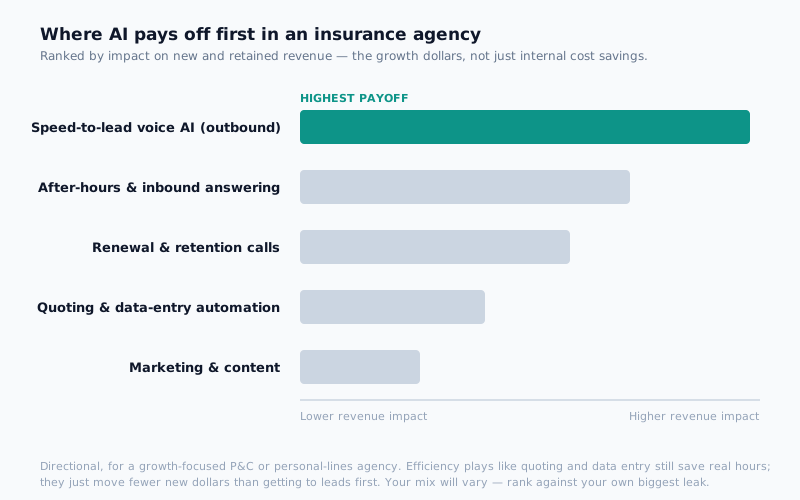
1. Speed-to-lead voice AI — the highest payoff
This is where AI touches new revenue most directly, so for most agencies it's where to start. The problem it fixes is brutal and well-measured: a web lead you call within five minutes is about 21 times more likely to qualify than one you call at thirty minutes (the MIT and InsideSales Lead Response Management study, still the reference number years later). And 78% of buyers go with the company that responds first. Leads don't wait. If you're buying shared leads, three or four competitors got the same name and the fastest dial usually wins.
No human team can hold that line. Producers are on other calls, at lunch, or gone by 6 p.m. A voice AI agent calls the instant a lead hits your CRM — often in under 60 seconds — asks your qualification questions, and warm-transfers a ready buyer to a licensed agent with the context attached. When everyone's busy, it books a callback instead of dropping the lead. It also calls the whole batch at once, which one person physically can't do. This is the single job where AI most reliably turns into bound policies, which is why it sits at the top of the chart.
2. After-hours and inbound answering
Right behind outbound is the phone you're already missing. Independent agencies miss a meaningful share of inbound calls during business hours alone, and after hours the line just rings. Every missed call is a quote request, a service issue, or a referral walking to the next agency in the search results. We put real numbers on this in what missed calls cost an insurance agency.
AI phone answering picks up every call, day or night, takes a message or a first notice of loss, books an appointment, and routes urgent items to a human. It doesn't book new policies as directly as outbound does, but it plugs a leak that's bleeding both new business and retention. For an agency drowning in inbound during the day, this one can jump to first.
3. Renewal and retention calls
Keeping a client is cheaper than winning one, and the math on retention is unforgiving: small changes in renewal rate compound hard over years. Most agencies know they should call clients before renewal, at the x-date, and after a claim — and most don't, because there's never time. AI can run that outreach on schedule, flag the accounts that need a human, and keep your book from quietly leaking out the back door. It's high value; it just tends to protect revenue rather than add it, so it lands mid-pack for a growth-stage agency and near the top for a mature book.
4. Quoting and data-entry automation
This is where a lot of the AI-in-insurance headlines live — reading documents, pre-filling quotes, pushing data into the agency management system. It's genuinely useful and it saves real hours. But notice it's an efficiency play, not a revenue play. It makes your existing work faster; it doesn't reach a lead you weren't going to reach. Worth doing, especially once the revenue leaks above are plugged. Just don't let a slick quoting demo convince you it's the first dollar you should spend.
5. Marketing and content
General AI assistants for writing emails, social posts, and blog drafts are the easiest AI to adopt and the cheapest, which is exactly why they're usually the least leveraged. Everyone has them; they rarely change the trajectory of an agency on their own. Use them, but don't mistake "we use AI for our newsletter" for "we have an AI strategy." The needle-movers are further up the list.
How to pick your first AI (a two-minute framework)
You don't need a committee. Answer three questions honestly.
First, where's the leak? Look at where prospects and clients fall out of your funnel. Uncalled leads? Missed inbound calls? Renewals slipping away? The biggest leak is your first project. Not the coolest tool — the biggest leak.
Second, does the tool do that one job well, or is it a suite that does everything a little? Purpose-built beats general for the job that matters. A tool made for regulated insurance outbound will handle TCPA, DNC, calling hours, and AI disclosure automatically. A general dialer with AI bolted on won't, and the agency carries that liability, not the vendor.
Third, what does the whole job cost, including setup and upkeep? A cheap per-seat or per-minute rate can hide a big build-and-maintain bill. Price the outcome, not the sticker.
Then do the one thing that settles it faster than any spec sheet: run a live test on your own script. For a voice tool, have it call your phone with your real qualification flow. You'll know in ten seconds whether it's ready for your leads.
The mistake to avoid
The most expensive mistake in 2026 isn't picking the wrong AI. It's buying a broad AI suite to "do AI," using 10% of it, and concluding AI doesn't work for insurance. It works. It works best when it's pointed at one painful, measurable job, given a fair test, and expanded only after it's proven a return on that job.
Start with the leak that's costing you the most binds. For most agencies, that's the lead you didn't call fast enough. If that's your leak, calling every new lead in under a minute, qualifying buyers, and warm-transferring them with TCPA and DNC guardrails built in is exactly what Entrovox is designed for. Book a 20-minute demo and we'll run a live test on your real list — and if speed-to-lead isn't your biggest leak, we'll tell you.